

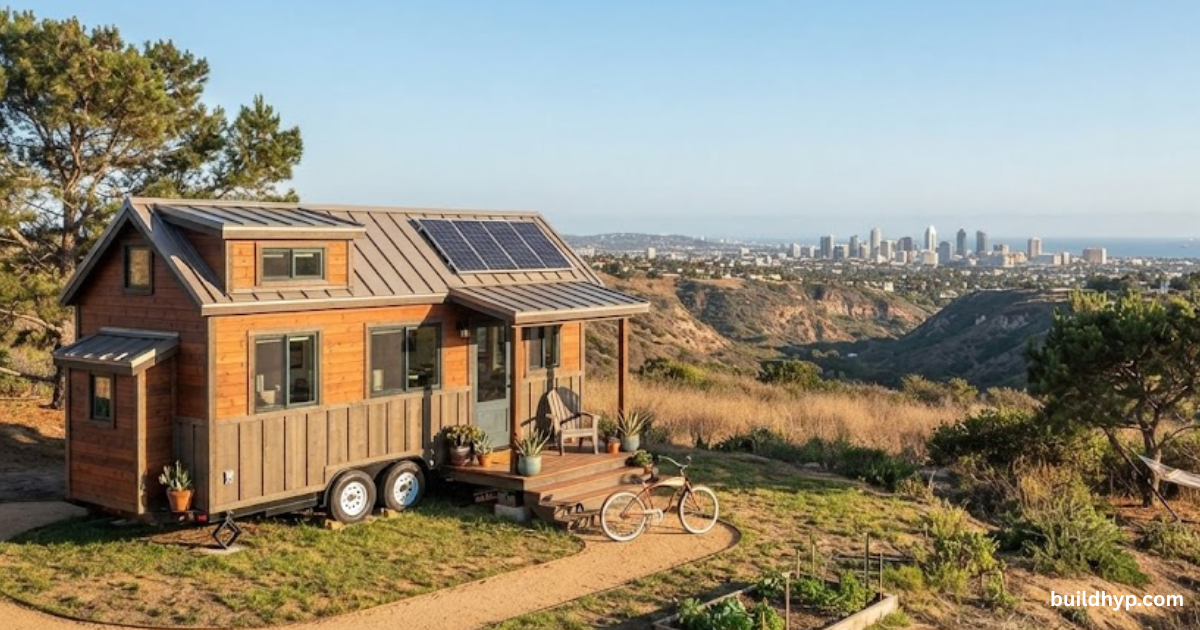
A “tiny home on wheels San Diego county” is a small, movable home built for everyday living. It usually has space for sleeping, cooking, eating, living, and using the bathroom. Since September 4, 2025, San Diego County has recognized qualifying THOWs as dwelling units under its zoning rules.
This means a THOW may be used as a primary or accessory dwelling when it meets the required rules. Before you place or live in one, you must check local zoning, size, certification, fire safety, utility, permit, and inspection requirements.
Are Tiny Homes on Wheels Legal in San Diego County?
The short answer is yes, under specific County rules. Since September 2025, THOW San Diego County projects can qualify as dwelling units when they satisfy the County’s standards. The determination allows a qualifying unit to function as either a primary dwelling or an accessory dwelling. It does not automatically create another dwelling entitlement on a property. Density and the number of permitted units still depend on applicable zoning rules.

There is an important jurisdictional catch. County rules apply to unincorporated San Diego County, while incorporated cities can enforce their own land-use regulations. The City of San Diego, for example, has separate rules for movable tiny houses under its Municipal Code. Its rules treat movable tiny houses as a separately regulated residential use connected to companion-unit and junior-unit provisions.
So, before searching for legal tiny homes in San Diego County, identify the property’s actual jurisdiction. A parcel in the City of San Diego isn’t governed by the County’s THOW determination simply because its mailing address says San Diego.
What Requirements Must a Tiny Home on Wheels Meet?
A qualifying unit must satisfy several San Diego County tiny home requirements before installation. The County limits a THOW to less than 430 square feet, with one floor plus a small loft of up to 150 square feet. The maximum height is 16 feet. The unit also needs approval from an accepted certification agency showing compliance with the ANSI A119.5 Park Model RV Standard and County requirements.
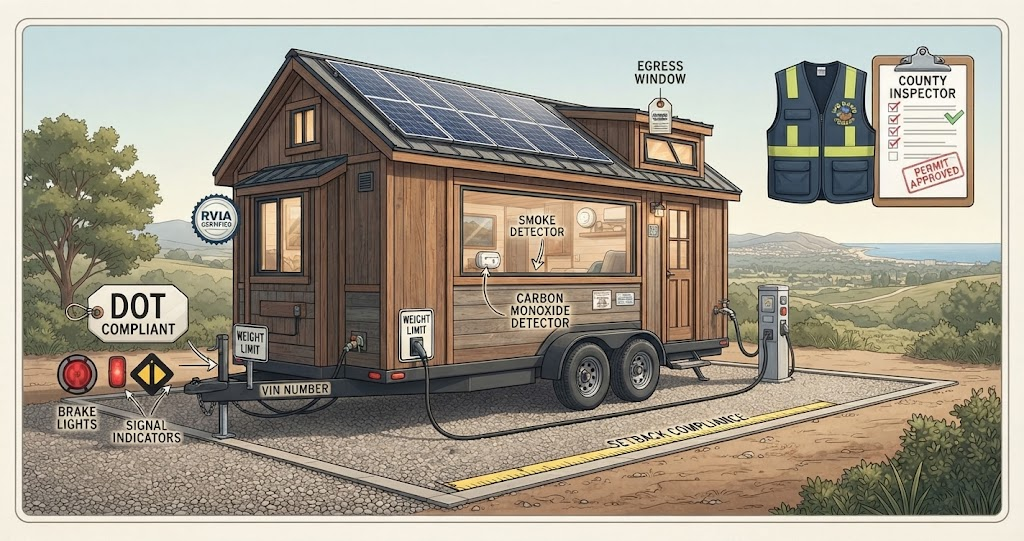
Construction details matter, too. County guidance requires noncombustible exterior walls and a fire-resistant roof. Depending on the property and fire conditions, an automatic sprinkler system may also apply. Fire access can affect approval, particularly on constrained or rural parcels.
Your THOW certification paperwork should be treated as a purchase checkpoint rather than an afterthought. County plans must include certification information, property details, manufacturer information, ANSI A119.5 compliance, and confirmation of County compliance. Approved agencies listed by the County include Pacific West Associates, NOAH, and the RV Industry Association.
| Requirement | Current County standard |
| Floor area | Less than 430 sq. ft. |
| Loft | Up to 150 sq. ft. |
| Height | Maximum 16 ft. |
| Floors | One floor plus permitted loft |
| Certification | Approved agency verification |
| Standard | ANSI A119.5 |
| Exterior walls | Noncombustible |
| Roof | Fire resistant |
| Permit | Required before installation |
How Much Does a Tiny Home on Wheels Cost in San Diego County?
The sticker price tells only part of the story. Current San Diego-area listings show new tiny homes starting around $129,000, while larger models can reach roughly $159,000. Those figures provide a useful market reference for a professionally built home, although the final price varies with size, finishes, appliances, engineering, certification, and delivery.
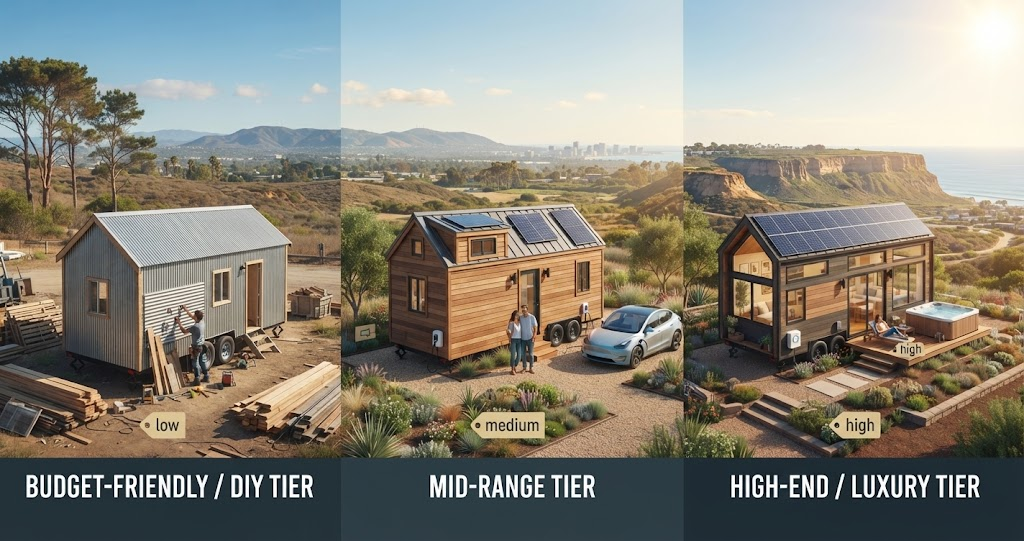
Then comes the site expenses. A realistic project budget can include transportation, grading, utility work, sewer or septic work, electrical service, water connections, permits, and inspection-related costs. For planning purposes, many buyers should reserve $15,000 to $50,000 or more for site and installation work. Difficult rural terrain, long utility runs, septic constraints, or substantial grading can push costs higher.
County permit charges aren’t one universal flat amount for every THOW. The actual fee depends on the project and required reviews. Your budget should therefore separate the home’s purchase price from the tiny home installation costs in San Diego County.
For perspective, an established local tiny-home community currently advertises long-term tiny-home leases around $1,500 to $1,650 per month, with water, septic, and trash included while electricity and propane are billed separately. That makes older online claims about tiny homes in San Diego for rent under $1,000 unreliable for current budgeting.
Where Can You Place a Tiny Home on Wheels in San Diego County?
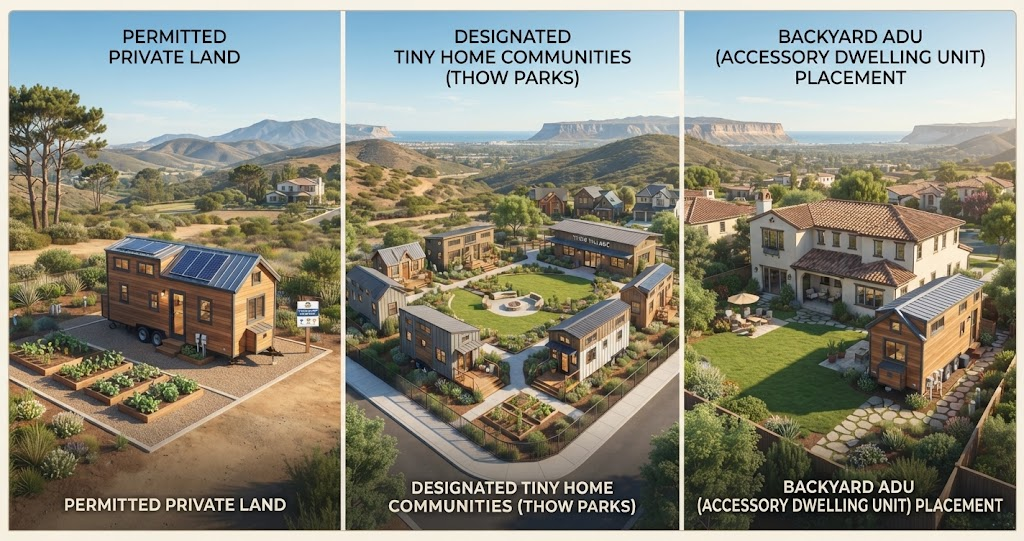
Finding a suitable parcel can be harder than finding the house. County approval depends on the property’s zoning, legal-lot status, available access, utilities, fire conditions, environmental constraints, and other site factors. A beautiful rural parcel may look ideal online yet fail because wastewater disposal or emergency access isn’t practical.
For a tiny home zoning review in San Diego County, start with the parcel’s jurisdiction and zoning designation. Then confirm whether the proposed THOW can function as a primary dwelling or an accessory dwelling on that property. Don’t assume every residential lot automatically qualifies.
Water and wastewater deserve special attention. The County may require an approved potable-water source and an appropriate wastewater solution. Properties using an onsite wastewater treatment system (OWTS) may need an evaluation by a qualified professional. The County’s environmental health guidance specifically addresses THOW projects served by septic systems and requires site-specific review.
Stormwater can matter as well. County plans may need information about impervious areas, disturbed areas, drainage controls, and Best Management Practices. The permit review can also involve flood conditions, grading, fire access, off-grid electrical systems, and right-of-way issues.
Before buying land, create a simple feasibility checklist:
- Confirm the property lies in unincorporated County jurisdiction.
- Verify zoning and legal-lot status.
- Check water availability and connection requirements.
- Investigate tiny home septic requirements in San Diego county if no sewer exists.
- Review fire access and separation conditions.
- Check grading, flood, and stormwater constraints.
- Confirm whether special coastal or environmental overlays apply.
How to Buy and Set Up a Tiny Home on Wheels in San Diego County
A successful project starts with the land, not the floor plan. Before paying a builder’s deposit, identify the parcel and confirm that its zoning and site conditions can support your intended dwelling. That step can prevent an expensive mismatch between a beautiful THOW and an unsuitable property.
Next, review the San Diego County tiny home permit requirements with Planning & Development Services. Your plans generally need a project scope, plot plan, THOW requirements, certification information, and applicable stormwater documents. Depending on the site, additional reviews can involve septic, fire access, grading, flood conditions, utilities, and right-of-way matters.
Then choose a unit that can meet the County’s standards. Ask the manufacturer for its certification documents before signing a final purchase agreement. Verify the stated square footage, height, construction specifications, certification agency, and expected installation requirements.
Once your permit is issued, coordinate delivery and site work carefully. Utility trenches, water service, sewer or septic connections, electrical work, and access improvements may require inspections. County guidance lists inspections that can include underground plumbing and electrical work, yard gas, water service, building sewer, and the final inspection. Fire-district review and sign-off may also apply.
Finally, don’t treat the wheels as a shortcut around building oversight. County approval still matters after delivery. An approved agency’s certification placard does not replace required County inspections. Once the required inspections are passed and the project receives final approval, occupancy can proceed.
A practical buying sequence
- Identify the jurisdiction and property.
- Check zoning, legal-lot status, and site constraints.
- Confirm water and wastewater feasibility.
- Select a THOW meeting County size and construction standards.
- Verify ANSI A119.5 certification and approved-agency documentation.
- Prepare the site plan, plot plan, and required permit documents.
- Apply for the required County permit.
- Complete delivery, utility work, inspections, and fire review.
- Obtain final approval before treating the unit as an occupied dwelling.
Final Thoughts on Tiny Home Living in San Diego County
A tiny home on wheels San Diego County project can offer a compact path to homeownership or additional living space, but legal placement requires more than buying a trailer-style house. The County now recognizes qualifying THOWs as dwelling units, yet each property still needs to pass the relevant zoning, site, utility, safety, certification, and inspection checks.
If you’re comparing tiny homes for sale in San Diego, evaluate the property and the home together. A certified unit won’t solve an unsuitable septic system, poor fire access, missing utilities, or incompatible zoning. Start with parcel feasibility, then choose the home that fits the site and the County’s requirements.
FAQs
Where can I find a tiny home on wheels in San Diego?
You can look at local builders. Check that any unit you buy meets San Diego County’s current THOW certification and installation requirements.
Are tiny homes on wheels legal in San Diego?
Yes. Since September 4, 2025, qualifying THOWs can be used as primary or accessory dwelling units in unincorporated San Diego County, subject to County requirements and permits. Incorporated cities may follow different rules.
Can I live in a trailer on my property in San Diego?
It depends on the property and the type of trailer. A qualifying THOW can serve as a dwelling in unincorporated San Diego County after meeting County requirements and receiving the required permit and inspections.
Where can I park my RV for free in San Diego?
Free RV parking isn’t generally guaranteed in San Diego. In the City of San Diego, overnight RV parking on public streets from 2–6 a.m. requires a Temporary Overnight Recreational Vehicle Permit, and other restrictions apply.

Welcome to BuildHyp! I’m an SEO Expert with several years of experience in SEO, link building, and website growth. I’m passionate about helping websites improve their online visibility and reach the right audience.
At BuildHyp, I share informative and useful blogs on different topics to provide readers with practical and easy-to-understand information. For SEO-related questions, collaborations, or any other inquiries, feel free to contact me.
3 thoughts on “Tiny Home on Wheels San Diego County: Local Guide”
Comments are closed.