

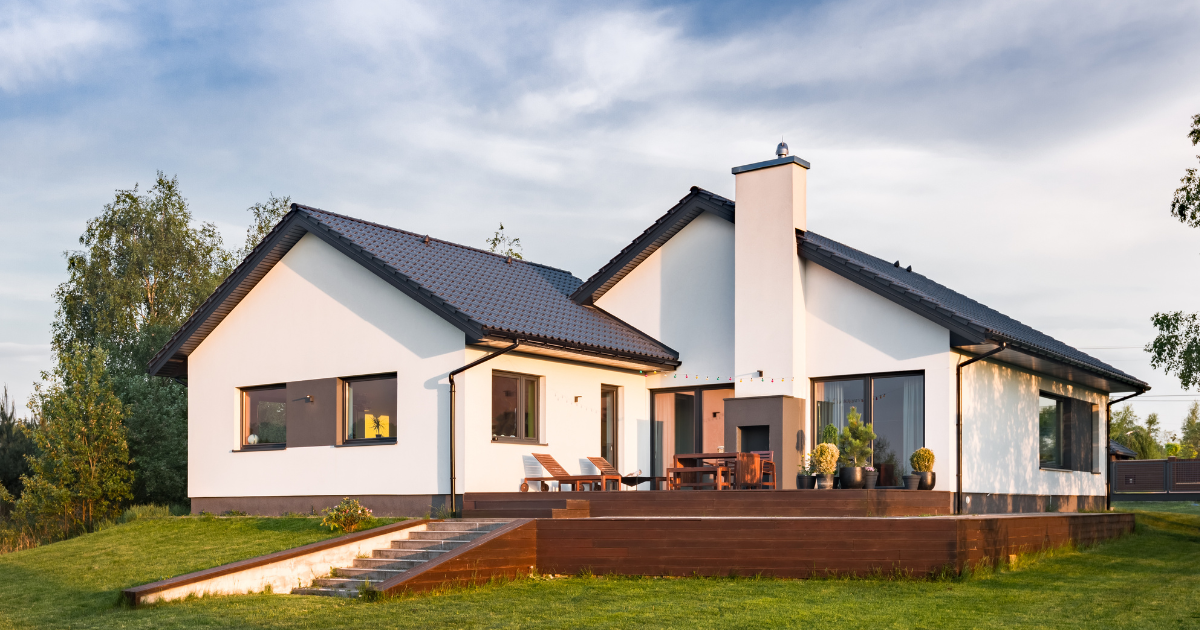
The most important Tiny Home Features in Los Angeles are those that improve cooling, save space, support efficient living, and meet local requirements. Hot summers, compact lots, and detailed permitting rules can make tiny home design more challenging than it first appears.
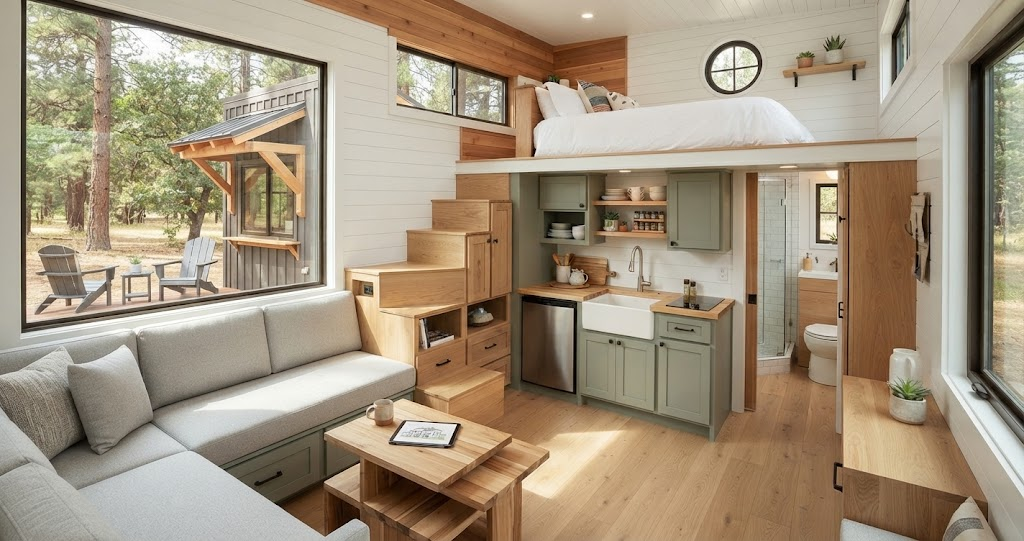
Features such as high-quality insulation, Low-E windows, multifunctional furniture, built-in storage, efficient kitchens, and shaded outdoor areas can make a small home more comfortable and practical. This guide explores the key features to consider, along with Los Angeles permitting, utility, and ADU requirements, so you can plan a tiny home that fits your property and lifestyle.
Why Tiny Home Design Choices Matter More in Los Angeles
Certain design decisions are particularly important for Los Angeles conditions. Strong sunlight can heat up the indoors, and limited lot space makes every square foot count. Tiny home zoning and local building requirements can also influence the size, placement, utilities, and construction method of the home.
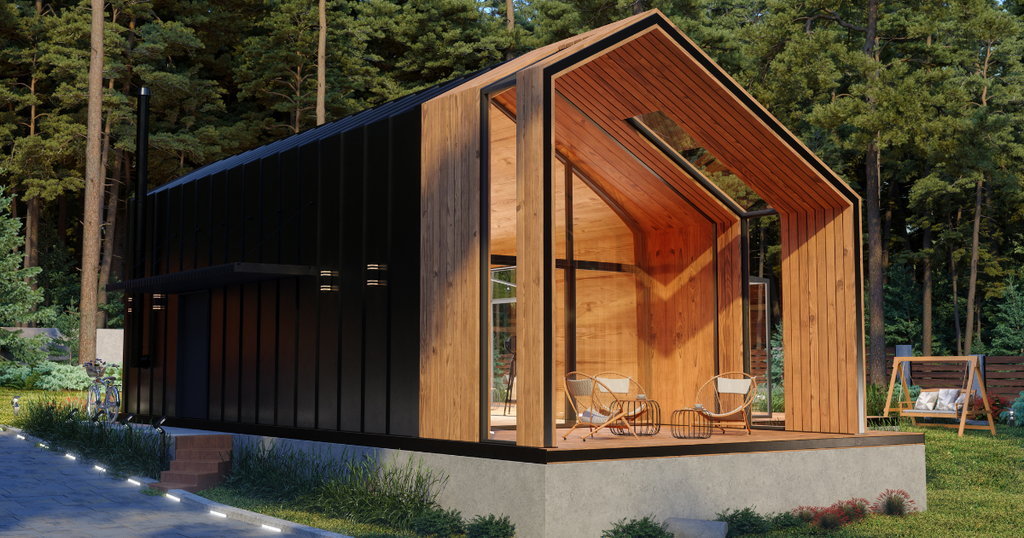
California’s 2025 Energy Code took effect for applicable permit applications on January 1, 2026. The updated standards address areas such as energy efficiency, ventilation, and heat-pump systems.
The best tiny house features therefore serve more than one purpose. They should improve comfort, reduce wasted space, simplify maintenance, and support long-term use.
Heat-Resistant Insulation and Efficient Cooling
Start with the building envelope, because cooling equipment can’t compensate for the heat gain by itself. The heat transfer through the walls and ceilings is slowed down by high insulation. Good air sealing prevents unwanted air movement from the outside.
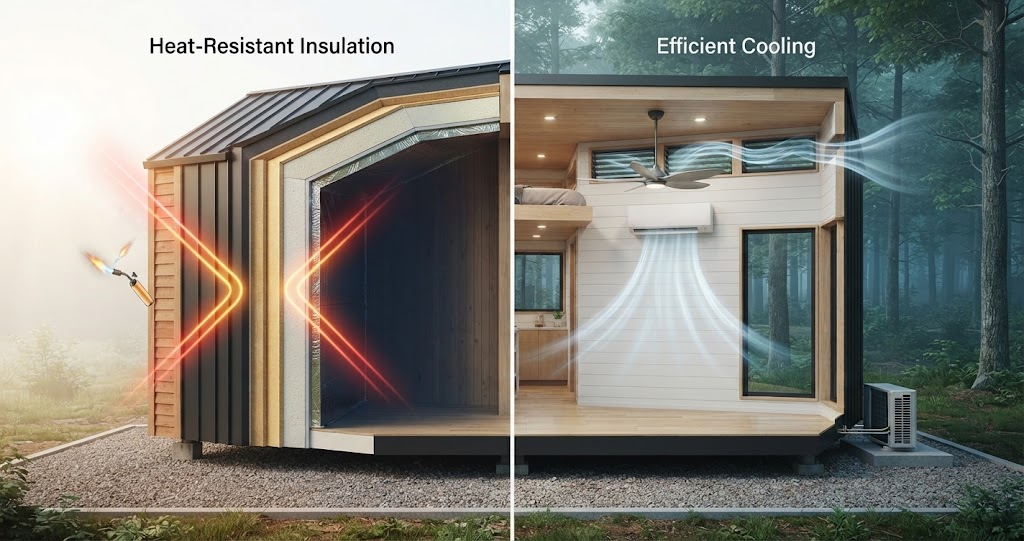
Rigid foam or spray foam may suit different assemblies when installed correctly. A reflective or cool roof can also reduce heat absorption. California Energy Commission guidance notes that cool roofs can improve comfort and reduce energy use.
A properly sized mini-split heat pump provides efficient heating and cooling without requiring a lot of room inside the home. If you’re building a super-insulated tiny home, you’ll want to seal up any gaps around doors, windows, wiring and plumbing penetrations. Small leaks can spoil an otherwise efficient envelope.
Low-E, Energy-Efficient Windows and Cross-Ventilation
Windows bring valuable daylight into a compact home, yet poorly selected glass can also invite unwanted heat. Low-E windows reduce heat transfer, while appropriate solar heat-gain ratings can help control indoor temperatures.
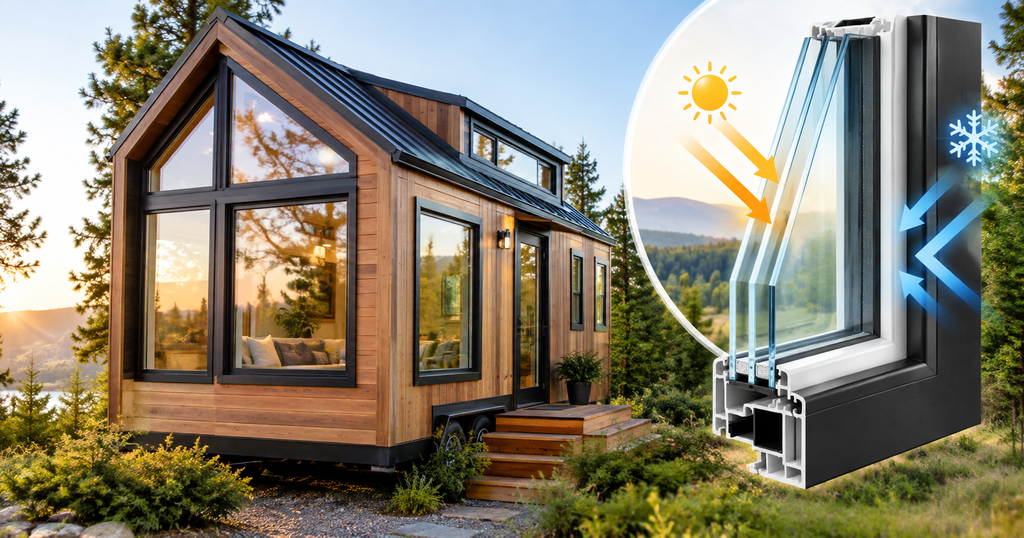
Window placement matters, too. Operable windows positioned on different sides of the home can encourage cross-ventilation when outdoor conditions are suitable. That makes tiny homes with natural light more comfortable without relying entirely on mechanical cooling.
California evaluates windows using performance measures such as U-factor and solar heat gain coefficient. The state also requires appropriate performance labeling for windows sold in California.
For tiny home design for Southern California, choose glazing based on the property’s orientation and surroundings rather than selecting windows solely for appearance.
Multi-Purpose, Space-Saving Furniture
Furniture should justify the floor area it occupies. A Murphy bed can turn a sleeping area into usable daytime space, while a fold-down table can serve as a dining surface, desk, or workspace.
Storage ottomans, benches with compartments, nesting tables, and movable work surfaces can add flexibility without crowding walkways. These flexible layouts are particularly useful when one room needs to perform several jobs.
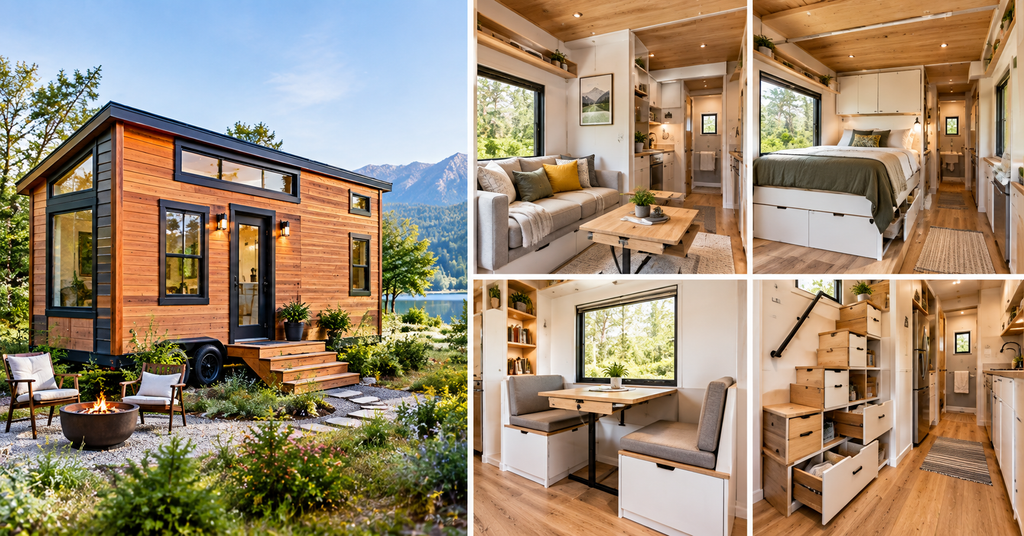
Before buying furniture, measure it in every position. A sleeper sofa might fit neatly when closed yet block a doorway when extended. Good planning keeps tiny home living practical rather than cramped.
Built-In and Vertical Storage Solutions
When floor space runs short, look upward. Tall cabinets, wall-mounted shelves, loft storage, and under-stair drawers can turn overlooked areas into useful storage.
Built-ins also reduce visual clutter because belongings have designated places. In a compact living space, shallow cabinets may work better than deep units that make everyday items difficult to reach.
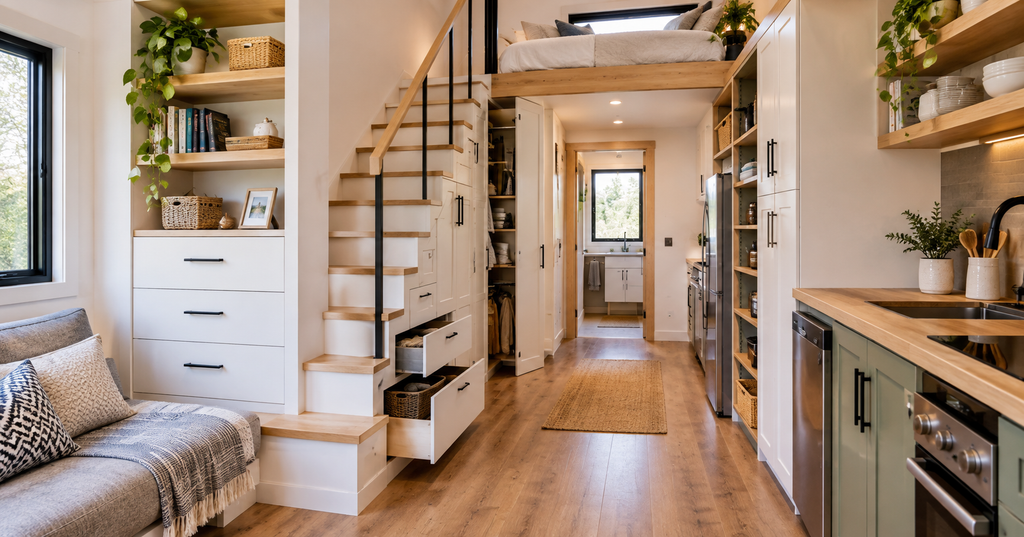
Plan storage around your actual habits. Cleaning products, linens, tools, seasonal items, and outdoor equipment often consume more space than expected. A small exterior storage area can protect valuable interior square footage.
Compact, Functional Kitchens
A small kitchen can still support everyday cooking when its workflow is carefully planned. Keep preparation, cooking, washing, and storage within an efficient reach.
Slide-out pantries can use narrow spaces beside cabinets. Induction cooktops provide a compact cooking surface, while apartment-size refrigerators and combination ovens can reduce the kitchen’s footprint.
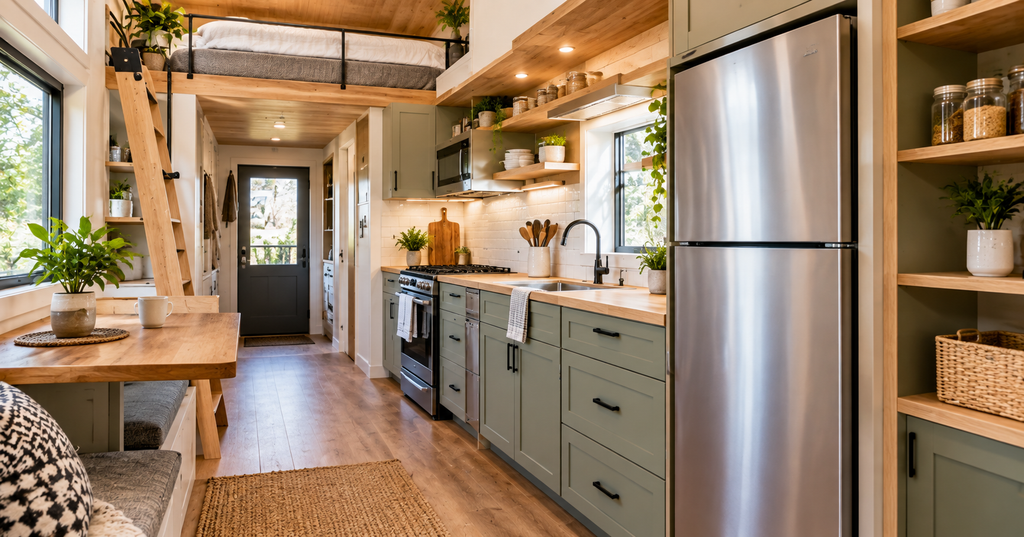
Utility planning should happen before cabinet layouts are finalized. Tiny home utilities need careful coordination because plumbing and electrical routes compete with cabinets, appliances, and structural elements. A well-designed kitchen can support long-term living without feeling makeshift.
Space-Efficient Bathroom Layouts
Bathrooms benefit from careful geometry. A corner sink can preserve circulation space, while a sliding door removes the floor area needed for a conventional door swing.
A wet bath can combine shower and bathroom functions when appropriate for the design. However, moisture control becomes critical in such a compact room. Enclosed plumbing, waterproof surfaces, proper drainage, and effective ventilation help protect the structure.
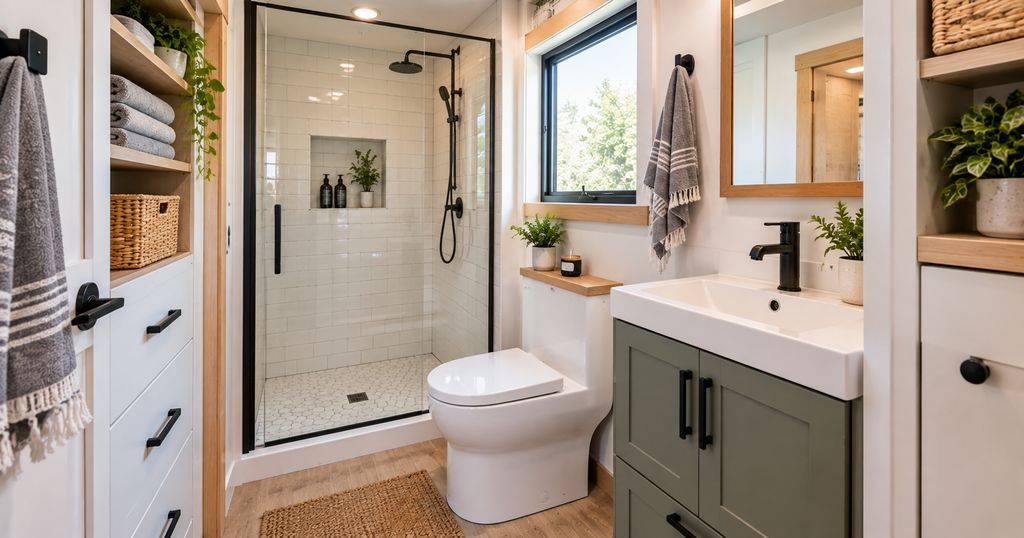
Don’t sacrifice ventilation or practical clearances just to gain a few inches. The most useful features that make a tiny home comfortable support both daily convenience and long-term durability.
Shaded Outdoor Living Space
Outdoor areas can make a compact dwelling feel substantially larger. A covered deck, shaded patio, or small pergola creates another place to eat, relax, work, or entertain.
Position doors and windows toward usable outdoor areas to strengthen outdoor connectivity. The visual connection can make the interior feel less enclosed while giving you another functional zone.
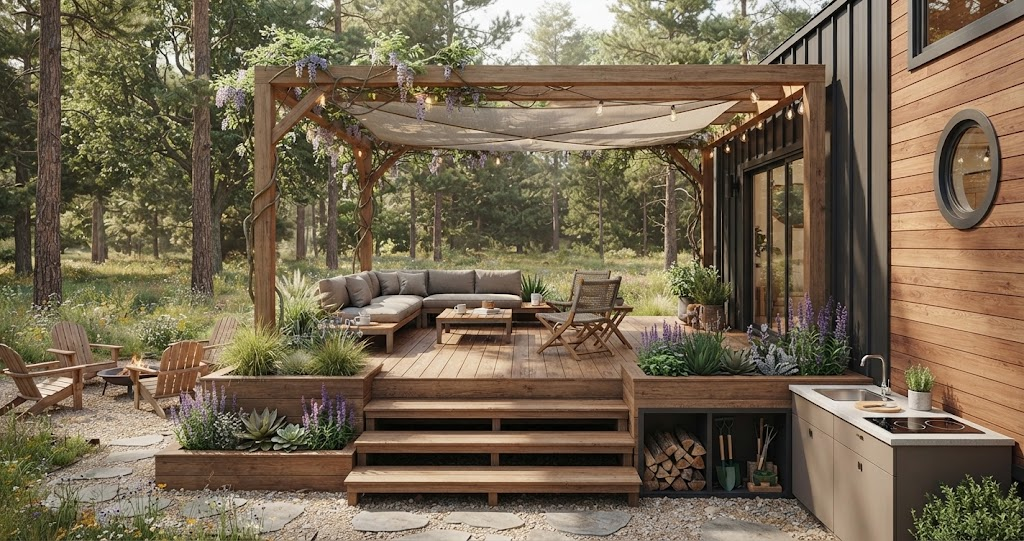
Shade also has a performance benefit. Properly positioned awnings, roof overhangs, and covered patios can reduce direct solar exposure around windows. For tiny homes with outdoor living space, plan drainage, privacy, fire safety, and durable finishes from the beginning.
Movable Tiny House and ADU Permitting Compliance
Permitting can determine whether a tiny home is actually legal and usable on a Los Angeles property. The city recognizes a Movable Tiny House (MTH) as a distinct category under LAMC Section 12.22A.33.
Current Los Angeles code defines an MTH as an enclosed independent living space that is DMV-licensed and registered and meets applicable ANSI 119.5 or NFPA 1192 certification requirements. The unit must measure between 150 and 430 square feet within the exterior wall faces.
That distinction matters because tiny homes on wheels, RVs, and city-recognized MTHs aren’t automatically the same thing. Certification also doesn’t eliminate local site requirements.
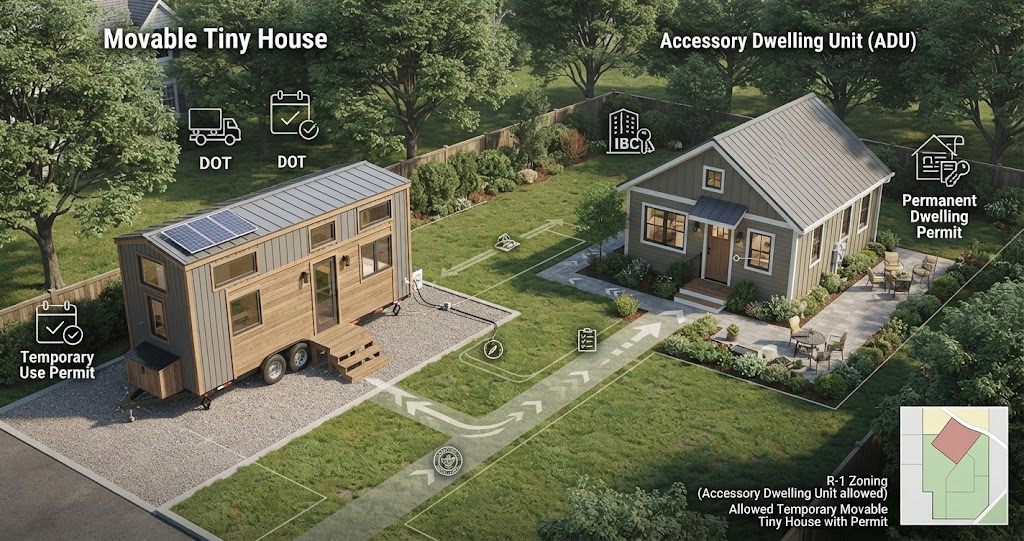
For tiny homes as ADUs in Los Angeles, the classification can be different. A foundation-based ADU follows applicable ADU requirements, while an MTH has its own provisions.
Certification terms also need careful interpretation. ANSI certification, NFPA certification, and RVIA certification can relate to different construction or recreational-vehicle standards. An RVIA-certified unit shouldn’t automatically be assumed to satisfy every Los Angeles ADU or MTH requirement.
Before purchasing a unit, verify tiny home permits, zoning, setbacks, utility access, fire-related restrictions, and installation requirements for the actual parcel. You can review local requirements through Los Angeles City Planning.
How to Prioritize Tiny Home Features for Your LA Lot and Budget
Start with compliance, then spend your budget on features that affect everyday performance. A practical order is:
- Confirm the legal pathway. Determine whether you’re planning a Movable Tiny House, permanent ADU, or another permitted dwelling type.
- Address climate control. Prioritize insulation, air sealing, efficient windows, shading, and properly sized heating and cooling.
- Plan utilities early. Check water and sewer connections, electrical capacity, drainage, and service requirements before finalizing the floor plan.
- Maximize storage. Use vertical cabinets, built-ins, under-stair compartments, and multifunctional furniture.
- Add lifestyle upgrades. Consider decks, larger windows, upgraded finishes, and smart appliances after the essentials are covered.
Costs vary considerably according to the structure, site, finishes, utilities, and permitting needs. Angi currently estimates Los Angeles ADU construction at about $150,000 to $375,000, although complicated projects can cost more.
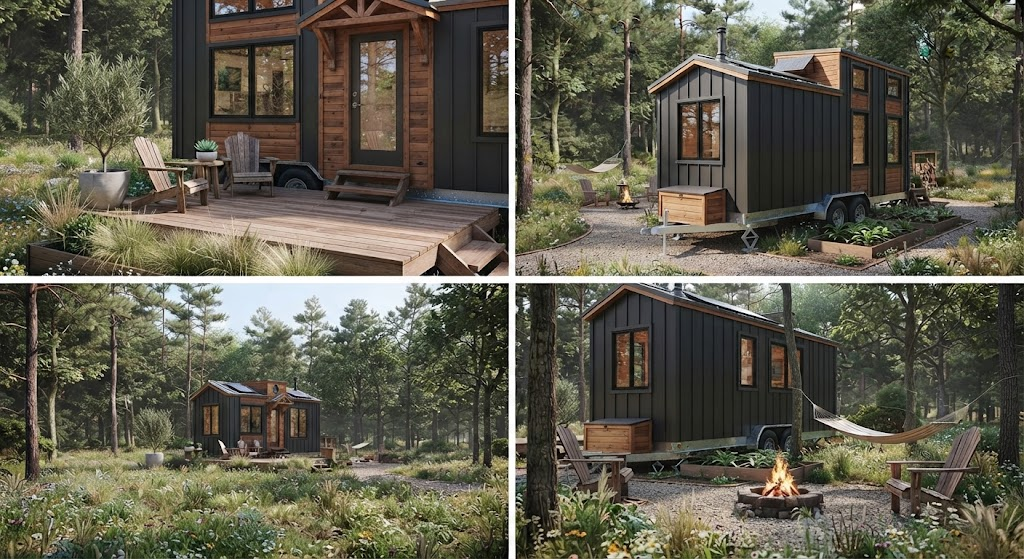
A Movable Tiny House can cost less than a conventional foundation-based ADU, but the purchase price isn’t the complete budget. Tiny home delivery, site preparation, utility connections, permits, installation, and required site work can add significantly to the final amount.
California also divides the state into 16 climate zones, with energy requirements varying by location.
That makes property-specific planning important. A design suitable for a coastal neighborhood may need different insulation, glazing, shading, or cooling strategies farther inland.
If you’re comparing movable tiny homes in Los Angeles, backyard ADUs, and conventional ADUs, evaluate the lot before selecting a model. Early professional guidance can reveal access problems, zoning limitations, utility challenges, or costly design changes before construction begins.
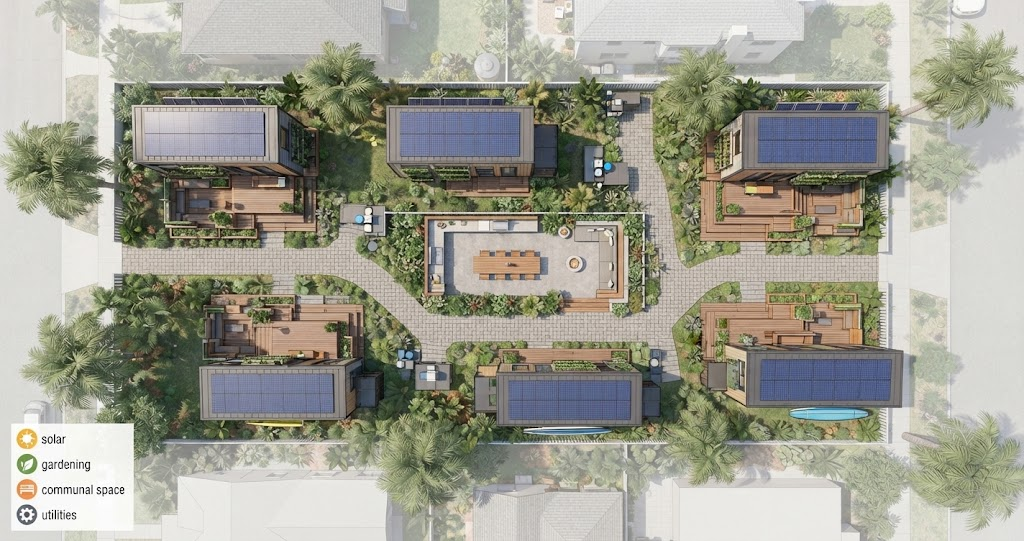
The right Tiny Home Features for Los Angeles should make the dwelling cooler, more functional, durable, and easier to approve. Heat control, efficient storage, sensible layouts, and regulatory compliance deserve attention before cosmetic upgrades. Start with your property’s zoning and physical constraints, then shape the home around how you actually plan to use it. A consultation or project quote can help you compare designs, costs, utility needs, and installation requirements before making a commitment.
FAQs
What are the most popular features in tiny houses?
Popular tiny house features include multifunctional furniture, built-in storage, loft bedrooms, compact kitchens, energy-efficient appliances, large windows, and outdoor living areas.
Are tiny homes allowed in Los Angeles?
Yes, but the rules depend on the home’s classification and the property. Los Angeles permits qualifying Movable Tiny Houses and ADUs under LAMC Section 12.22A.33, with specific size, certification, utility, and placement requirements.
What are three positive features of a tiny house?
Three major benefits are lower space requirements, efficient use of resources, and flexible living. Smart layouts can also reduce clutter while providing the essential functions of a conventional home.
Does a tiny home increase property taxes?
It can, particularly when the home becomes part of the real property or is permanently affixed to an approved foundation. Tax treatment varies by structure and ownership, so Los Angeles homeowners should check with their county assessor.
What is the average lifespan of a tiny house?
A well-built tiny house can last 30–50 years or longer with proper maintenance, quality materials, moisture control, and timely repairs. Lifespan varies considerably by construction quality and whether the home remains mobile.
Are tiny homes still popular in 2026?
Yes. Tiny homes remain an active housing and design trend in 2026, with the global market projected to grow from $1.42 billion in 2026 to $1.79 billion by 2031.
Which state is most tiny home friendly?
There isn’t one universally recognized “most tiny-home-friendly” state because local zoning often determines what you can legally build or place. A 2025 HomeGnome study ranked Texas first for tiny-home living, but that ranking reflects its own criteria rather than a nationwide legal standard.

Welcome to BuildHyp! I’m an SEO Expert with several years of experience in SEO, link building, and website growth. I’m passionate about helping websites improve their online visibility and reach the right audience.
At BuildHyp, I share informative and useful blogs on different topics to provide readers with practical and easy-to-understand information. For SEO-related questions, collaborations, or any other inquiries, feel free to contact me.