

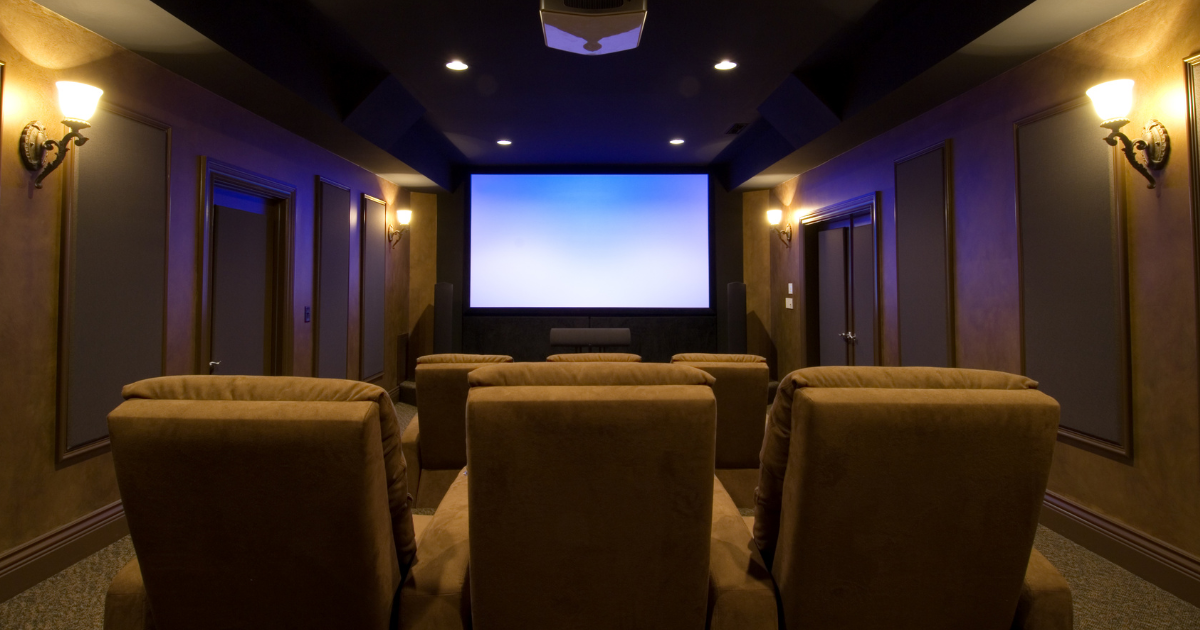
A good Home Theaters in Small Cabins setup doesn’t require a huge room or expensive cinema gear. You need the right screen, comfortable seating, controlled lighting, and carefully placed audio equipment.
In San Francisco, the challenge becomes more specific because compact structures can have unusual layouts, limited electrical capacity, large windows, and wood finishes. Whether you’re planning a private movie room or improving a cabin rental, start with the room itself. Measure first, then choose equipment that fits naturally.
How to Plan a Small Cabin Home Theater
Before buying a projector or surround system, measure the room from wall to wall. Record the ceiling height, window locations, doors, outlets, heating equipment, and usable wall space. A small-space home theater works best when every part of the room serves a purpose.
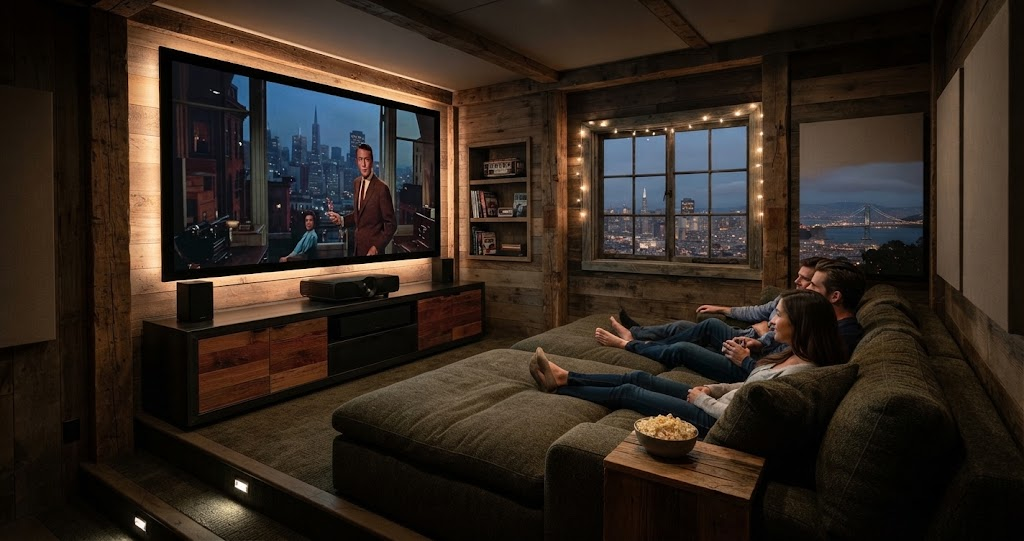
First, decide how you’ll use the room. A dedicated cabin movie room can accommodate permanent equipment and darker finishes. A shared living area needs more flexibility. In that case, choose furniture and technology that can disappear into the background when movie night ends.
For a practical layout, account for:
- Screen or television width
- Seating depth and walking clearance
- Projector throw distance
- Speaker locations
- Power and HDMI connections
- Streaming equipment
- Equipment ventilation
- Storage for remotes and accessories
Keep access behind the receiver, media console, and other major components. Reaching a loose cable shouldn’t require dismantling the entire installation.
Your cabin interior design also affects performance. Timber walls create warmth and character, yet bare wood, glass, and hard flooring can produce noticeable sound reflections. Rugs, curtains, upholstered furniture, and carefully chosen acoustic treatment can soften the room without hiding its rustic appeal.
What Screen and Projector Setup Works Best in a Small Cabin?
The best display depends on room depth, available light, and your viewing habits. A television usually offers the simplest small room entertainment setup because installation takes little space and modern screens perform well in brighter rooms.
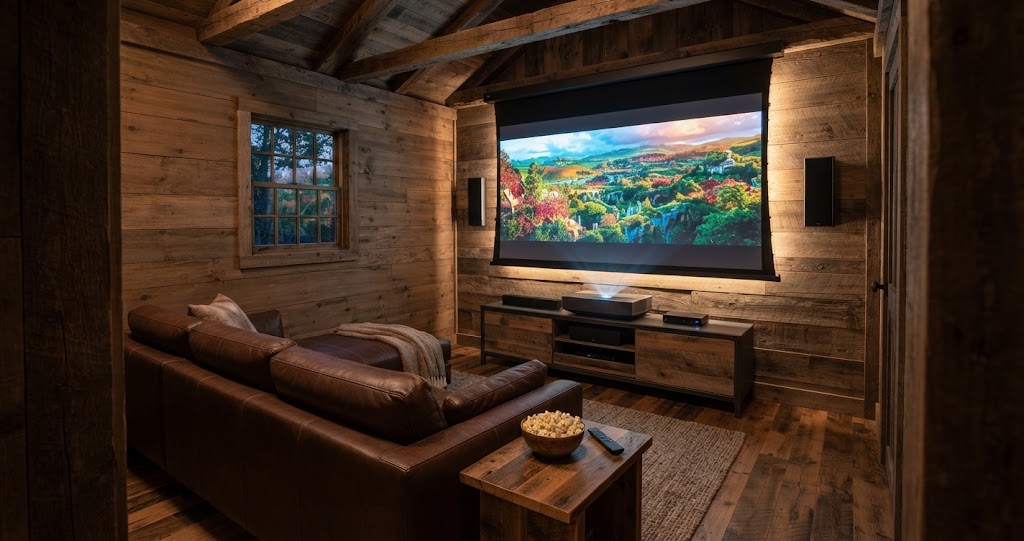
Projectors become attractive when you want a larger image without giving up an entire wall to a television. Short-throw and ultra-short-throw models are particularly useful when cabin depth is limited.
For example, Epson lists an ultra-short-throw projector capable of producing a 100-inch image from 17.3 inches away and a 120-inch image from 20.2 inches.
That compact projection distance keeps equipment away from the seating area. It also reduces the chance of someone walking through the projector beam or bumping the unit.
| Display option | Best suited to | Typical equipment budget |
| 55–65-inch TV | Bright or multipurpose rooms | 400–1,200 |
| Standard projector | Darker rooms with adequate depth | 600–2,000+ |
| Ultra-short-throw projector | Shallow rooms | 2,000–5,000+ |
| Projector screen | Dedicated projection setup | 200–1,000+ |
These figures provide planning ranges rather than fixed San Francisco prices. Brand, resolution, brightness, installation, and screen quality can shift the final cost considerably.
Natural light deserves attention, too. A cabin with Pacific views may look beautiful during the day but create glare during a film. Blackout curtains or adjustable shades give you better control without permanently blocking the windows.
How to Maximize Seating and Floor Space in a Cabin Theater
Smart seating can make Home Theaters in Small Cabins feel much larger without wasting valuable floor space. In a narrow cabin, one comfortable seating row often makes more sense than squeezing in two. You gain usable floor area while preserving a clear route through the room.
Compact sofas work well for families and couples. Recliners provide individual comfort but usually need more clearance. Built-in benches can offer another advantage because the space underneath can become discreet storage.
Dual-purpose furniture is especially useful when the theater shares a compact living area. A storage ottoman can hold blankets and controllers. A bench can store board games. A slim media console can house streaming equipment without consuming valuable floor space.
Wall mounting can also improve space utilization. A television mounted at an appropriate viewing height leaves the floor open for furniture and circulation.
If the property functions as a cabin weekend getaway, flexibility matters even more. You might watch a film at night, then need the same area for breakfast, games, or conversation the next morning.
For smaller properties, prioritize comfort over capacity. Ten cramped seats won’t create a better cabin movie experience than four comfortable ones with enough room to move.
How to Improve Sound, Acoustics, and Lighting in a Small Cabin Theater
Sound can behave differently inside a timber cabin than in a conventional living room. Wood walls, glass, and hard floors reflect sound energy. Those reflections can make dialogue sharper and reduce clarity during busy action scenes.
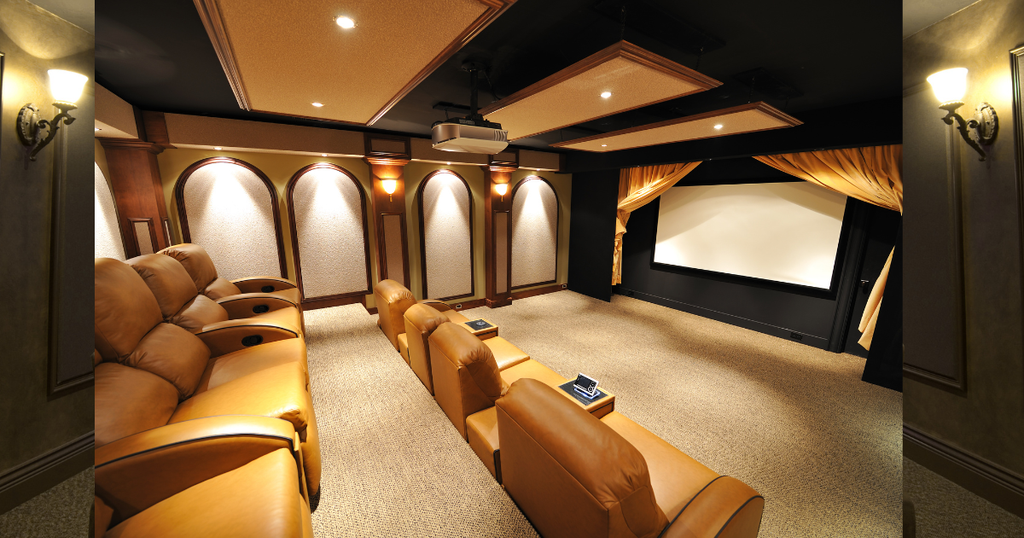
Start with sensible speaker placement rather than buying the biggest system available. Compact speakers or bookshelf speakers can deliver strong audio without overwhelming the room. Keep the center speaker close to the screen so dialogue appears to come from the actors.
Place surround speakers beside or slightly behind the seating position. Then test the subwoofer from several locations. Its position can significantly change bass response because room modes create peaks and dips in smaller spaces.
You can improve small room acoustics without turning the cabin into a recording studio. A thick rug can reduce floor reflections. Upholstered furniture adds absorption. Acoustic panels can control excessive reflections while shelves and irregular surfaces provide some diffusion.
One well-positioned subwoofer may be enough for a compact room. Multiple subwoofers can improve bass consistency in larger spaces, but they also require more equipment, power, and careful calibration.
Lighting should support the screen rather than compete with it. Use dimmable fixtures and warm, low-level illumination around the seating area. Blackout shades can handle daylight when you want a more immersive viewing environment.
ENERGY STAR reports that certified LED lighting can use up to 90% less energy than traditional incandescent lighting. Efficient lighting can therefore reduce both energy use and unnecessary heat around your entertainment equipment.
What Should San Francisco Homeowners Consider Before Adding a Cabin Home Theater?
Before remodeling an accessory structure, establish how the building is classified and determine what work you plan to perform. Installing a television inside an existing room is very different from converting a structure into habitable space.
San Francisco guidance states that habitable rooms need natural light and ventilation. Its ADU checklist specifies a minimum net glazed area of 8% of room floor area and natural ventilation equal to 4% of floor area or mechanical ventilation.
Structural work also needs careful planning. San Francisco guidance calls for structural drawings and calculations when applicable work affects gravity-load elements or seismic-resisting elements.
Electrical demand deserves attention before adding an AV receiver, projector, subwoofer, streaming devices, lighting, and heating equipment to an older structure. San Francisco’s residential electrical permit schedule bases fees on project components such as outlets, devices, wiring, and inspections.
Before permanent installation, check:
- Existing electrical capacity
- Applicable permits
- Wall structure before mounting equipment
- Ventilation around electronics
- Window and emergency-egress requirements
- Heating and wood-burning stove clearances
- Moisture exposure
- Internet availability
Local cabin accommodation also varies widely. California State Parks, for example, describes the Steep Ravine cabins near Stinson Beach as rustic accommodations with wood stoves and sleeping platforms. They don’t have running water.
That distinction matters when researching San Francisco cabin rentals, Cabins near San Francisco, or other lodging options. A rental cabin may have completely different electrical, internet, furniture, and entertainment provisions than a privately owned accessory structure.
Search phrases such as coastal cabins near San Francisco, forest cabins near San Francisco, redwood cabin retreats, and San Francisco lodging alternatives describe different accommodation needs. They shouldn’t be treated as interchangeable with home-theater planning.
Final Thoughts
The best Home Theaters in Small Cabins start with thoughtful planning rather than oversized equipment. Measure the room, choose a display that suits its depth, and arrange seating around comfortable viewing distances. Then manage reflections, daylight, and equipment heat without sacrificing the cabin’s character.
For San Francisco properties, check electrical, structural, ventilation, and permit requirements before making permanent alterations. Whether you’re creating a private movie room, a family-friendly entertainment area, or a feature for a weekend cabin retreat, the goal is simple: make technology fit the cabin instead of making the cabin revolve around technology.
Frequently Asked Questions
What is the best home theater system for a small room?
A 2.1 or 3.1 system with compact speakers and one subwoofer is a practical choice for most small rooms. Dolby also notes that compact Dolby Atmos options such as 2.1 or 3.0.2 can work well in small spaces.
How can I set up a home theater in a small room?
Start with the room dimensions and viewing distance, then position the screen, seating, and speakers around the available space. Control glare with curtains and use acoustic treatment to reduce unwanted reflections.
What are some ideas for a small home theater room?
Use a single seating row, a wall-mounted TV or short-throw projector, compact speakers, and dual-purpose storage furniture. Dimmable lighting and rugs can also improve both comfort and acoustics.
What is the minimum room size needed for a home theater?
There is no universal minimum, because equipment and seating determine the required space. A 10 × 12-foot room can support a basic single-row theater, although larger dimensions provide more flexibility.
What size speakers are best for a home theater?
Choose speakers based on the room, listening distance, and required output rather than physical size alone. Compact bookshelf or wall-mounted speakers can work very well in small rooms when positioned and calibrated correctly.
How much does a home cinema room cost?
A small home cinema can range from a few thousand dollars for basic equipment to $10,000 or more for premium displays, surround sound, acoustic treatment, seating, and installation. Your room size and equipment choices have the biggest effect on the final cost.

Welcome to BuildHyp! I’m an SEO Expert with several years of experience in SEO, link building, and website growth. I’m passionate about helping websites improve their online visibility and reach the right audience.
At BuildHyp, I share informative and useful blogs on different topics to provide readers with practical and easy-to-understand information. For SEO-related questions, collaborations, or any other inquiries, feel free to contact me.